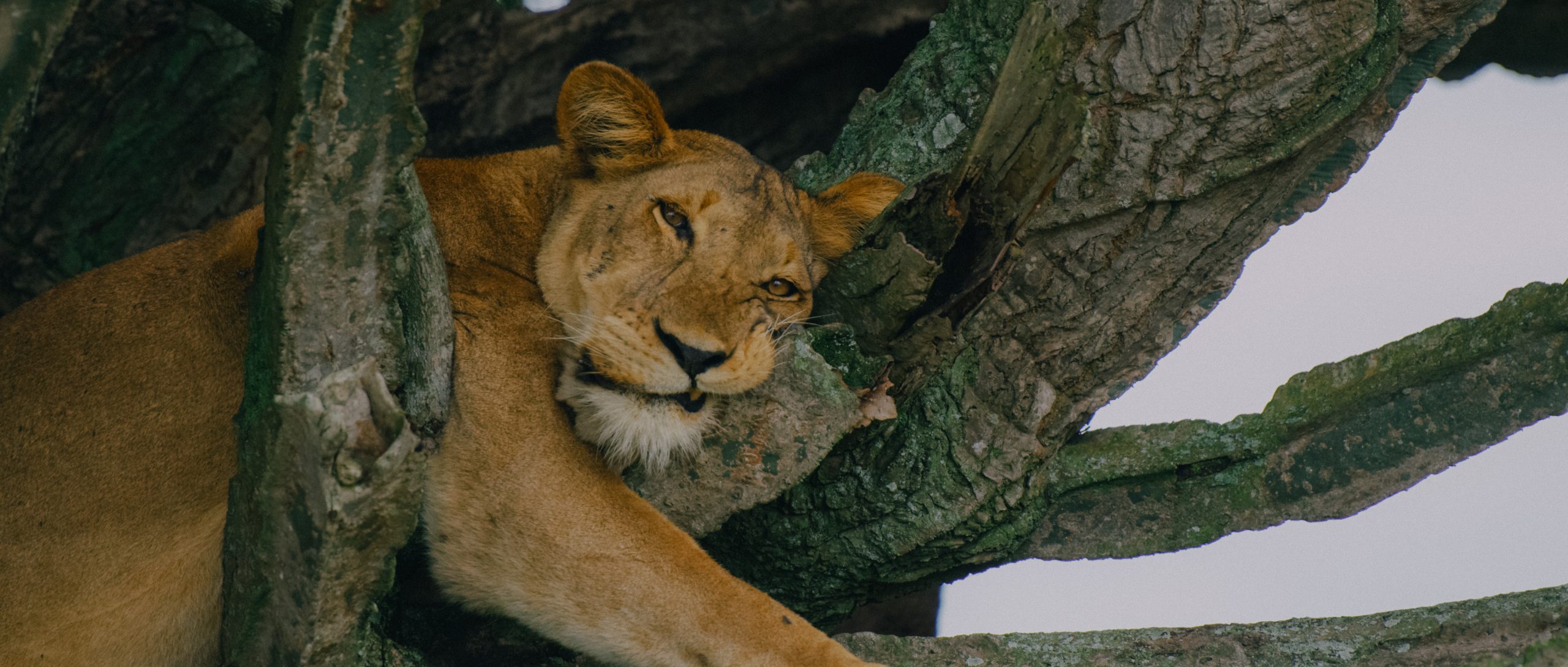
Within the remote southern sector of Uganda’s Queen Elizabeth National Park lies one of the world’s most extraordinary wildlife spectacles: lions that climb trees. Unlike their typically terrestrial cousins, the lions of Ishasha exhibit this rare arboreal behaviour daily, transforming the park into an unforgettable safari destination for wildlife enthusiasts

These remarkable lions are found exclusively in the Ishasha sector of Queen Elizabeth National Park. This side of the park is notably reachable via a 5–6 hour drive from Kampala
1-Escape from biting insects: During rainy seasons, tsetse flies and other ground-level pests notably make the branches a more comfortable, bite-free zone.
2-Relief from heat: Temperatures in the Ishasha savannah often soar above 28°C (82°F), and also the elevated branch positions offer shade and cooling breezes.
3-Strategic vantage points: From the treetops, lions can indeed better observe prey like Uganda Kob or potential threats, gaining a tactical advantage.
4-Cultural learning: This tree-climbing seems to be a learned behaviour passed down from one generation to the next, rather than an instinct
Population Estimates
The Ishasha prides notably comprise around 50 lions across three prides, including the unique tree climbers.
Conservation Significance
Queens Elizabeth National Park is adesignation for lion conservation unit by IUCN and also plays a vital role in lion preservation in Central Africa. Ongoing efforts by the Uganda Wildlife Authority and also partners involve active monitoring using radio collars and other strategies.
Dry seasons of June to August and December to February—are ideal for accessing Ishasha and also maximizing visibility of tree-climbing behaviour.
Early mornings and also late afternoons are peak times to spot lions lounging in trees, often after feeding.
The tree-climbing lions of Ishasha are among nature’s most unusual and also beloved wonders. Their survival and also the preservation of this unique behaviour depend on continued conservation efforts. The efforts from anti-poaching patrols and tourism support to habitat protection. Losing this behaviour would indeed mean losing a rare chapter in the story of wildlife adaptation.
WhatsApp us